Summary: Accent walls give homeowners a practical way to introduce color, depth, and personality without changing an entire room. Thoughtful color selection, proper wall preparation, and professional application help create a balanced focal point. Whether you are refreshing a bedroom, living room, dining area, or home office, interior house painting near me and a trusted commercial exterior painting service offer useful examples of professional painting standards.
A well-planned accent wall does more than introduce a different paint color. It’s used for directing attention, highlighting architectural features, providing visual contrast, and setting the tone of a room. An accent wall is a common home improvement option when one would like a noticeable change yet not repaint all surfaces.
Picking a bold color is only part of the story in creating an accent wall. The overall look can vary due to room size, light, furniture positioning, finishes, and architectural features. People who are looking for interior house painting near me are looking for professionals who understand the details of such fine work and know exactly what the finished result will look like.
What Makes an Accent Wall Effective?
An accent wall works best when it has a clear purpose. When selecting a wall for a sculpture, don’t just pick any because it is uncluttered; think about the focal point of the room.
Any focal point, like a fireplace, built-in shelving unit, headboard, TV wall, or architecture, will do. Accent walls are also a great way to draw attention to an artwork, bookcase, or fireplace, according to Benjamin Moore.
A darker color on a lighter-colored wall is going to give this a sense of dimension; the same is true of using complementary colors if their surrounding walls are lighter. interior house painting near me A subtle shift within the same color family provides a quieter effect.
Its objective is to not only add visual interest but also a sense of continuity to the room. There are many things to consider when deciding on what will work with the color chosen, such as furniture, flooring, curtains, decoration, and other accessories.
How Accent Walls Transform Living Rooms?
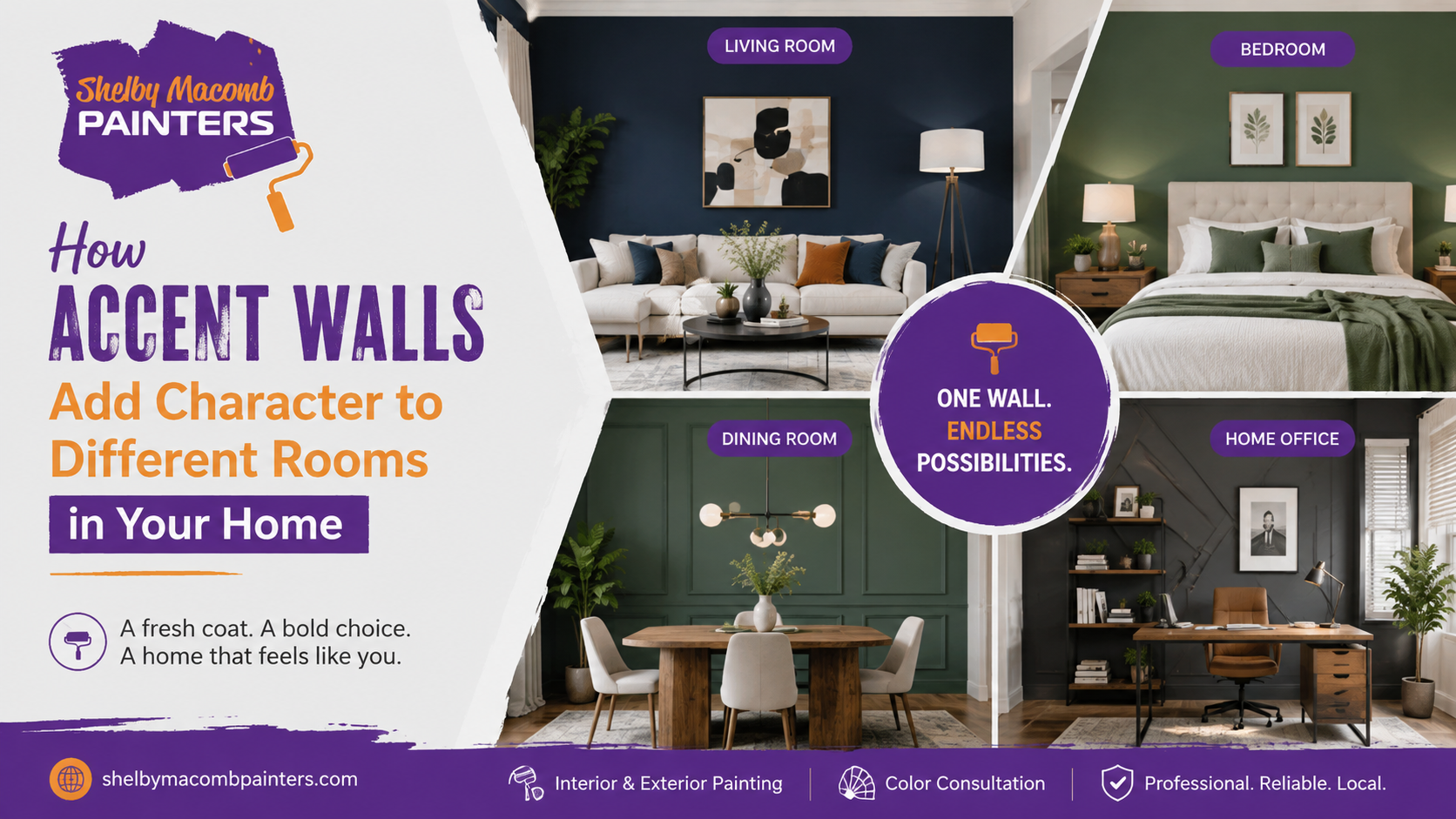
Living rooms often benefit from accent walls because they provide a natural location for a visual focal point. Colours can be great to use on a wall behind a sofa or fireplace, entertainment centre or large piece of artwork.
There are various prints and shades of deep blue, charcoal, forest green, warm terracotta, and muted earthy shades; each one gives out a different impression. Darker colors can be used to give depth and definition, while lighter colors will create a more relaxed feel.
Whether it is just an accent wall or a room defined by a fireplace, a neutral living room accent wall will add contrast without having to make major changes to furniture and decor. Another way homeowners may choose colors is by matching a color pattern found in their rug, cushion, art, or other accent items.
How Accent Walls Add Personality to Bedrooms?
Bedrooms can be the place to utilize color in a more personal manner. A wall behind the bed often serves as the natural focal point because it frames the headboard and creates a visual anchor.
Homeowners choose to go for a laid-back look, then soft greens, neutral tones like muted shades of blue, warm shades of taupe, and dusty shades of rose will do nicely. Stronger colors create more drama, while subdued shades maintain a peaceful appearance.
Bedrooms are a place where lighting can be a consideration. What may seem balanced in the light during the day can greatly shift in color at night when illuminated by warm lights. Homeowners can check into the results of paint samples subjected to various illumination sources to see how that color will appear during the day.
What Accent Walls Bring to Dining Rooms?
Dining rooms offer more freedom for expressive color choices. Accent walls offer additional visual organization in areas that are going to be filled with servers, a table, lighting fixtures, artwork, and other elements.
Use rich green, navy, burgundy, deep beige, or brown (the earthy tone) colors to establish a more personal ambiance. A lighter accent color creates a fresher and more open appearance.
Homeowners also might use an accent wall to define a dining area within an open floor plan. A carefully selected color helps distinguish the dining space from adjacent living or kitchen areas without requiring physical walls or structural changes.
How Accent Walls Work in Home Offices?
A home office benefits from visual definition, especially when it shares space with another room. Having an accent wall behind a desk will make it easier to have a clear background and established working space.
When coupled with an inky background, neutral shades of color look like a professional look. Green and blue hues make suitable office colors, as they won’t overpower the ambiance.
The wall behind a video meeting setup also deserves attention. It’s an advantage to consider well-painted backgrounds to ensure a polished appearance and add a personalized look to the room during virtual meetings.
How Accent Walls Enhance Kitchens and Bathrooms?
Kitchens and bathrooms require thoughtful color selection because cabinetry, tile, countertops, fixtures, and hardware already introduce multiple finishes.
An accent wall may serve as a focal point in a kitchen, accent an eating area, or open shelving or a breakfast nook. In a bathroom, a painted wall behind a vanity or freestanding tub may provide a strong focal point.
Special factors such as moisture conditions and needs for the cleaning also dictate paint selection in such areas. Homeowners need finishes suited to the room’s conditions and should address surface imperfections before painting.
Conclusion
Incorporating accent walls in homes is a great solution to rejuvenate a space, bring character and depth to a plain wall, and provide a focal point. The correct wall and color will complement the existing design of the room and won’t clash with it. Careful preparation also plays a major role in achieving a clean, professional appearance.
While thinking about interior house painting near me, take note of the interplay between color, light fixtures and architectural features, as well as furniture, ahead of starting a job. When homeowners think about getting their home’s interior painted, they should do so with careful planning, professionals at their disposal, and attention to detail from the contractor.
Contact Shelby Macomb Painters to discuss your next interior painting project and create a finish that complements your home.
FAQ
What is the best wall to use for an accent wall?
Generally, the most favorable accent wall will provide a natural area of focus. Walls behind fireplaces, beds, sofas, built-in shelving, or significant artwork often work well because they already attract attention.
Which rooms should have accent walls?
The accent room isn’t limited to any one space in the home, from the living room to bedrooms, dining room to home office, and kitchens to bathrooms. The wall for selection and the color should harmonize with the existing features of the room.
Which color should I take for an accent wall?
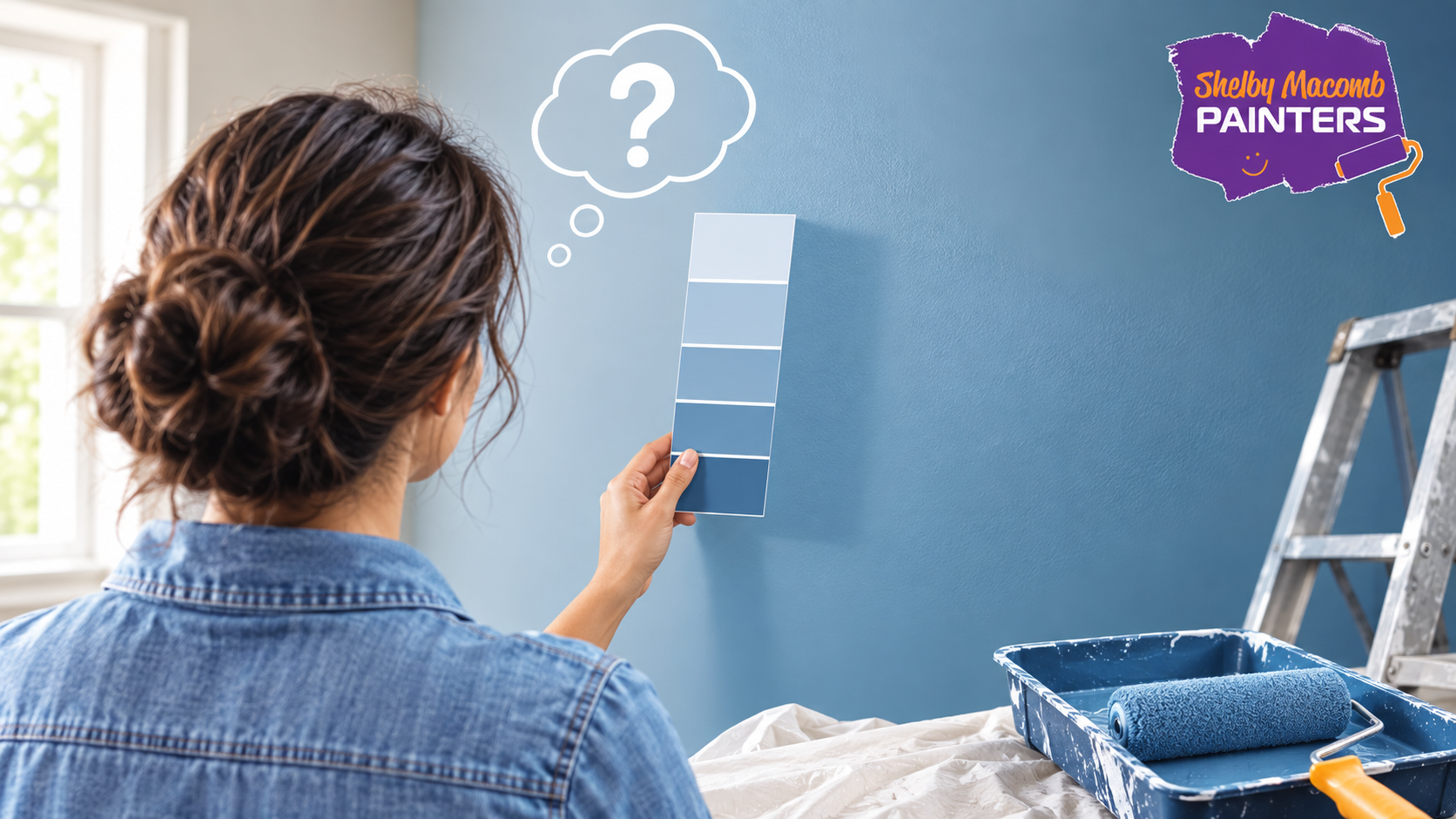
Start by examining existing furniture, flooring, artwork, cabinetry, and accessories. Choose a color to match these aspects, and then inspect paint samples in the various lighting situations before deciding on your final color choice.
Does an accent wall require professional painting?
A homeowner might handle a simple accent wall independently, while professional painting offers advantages when the surface needs extensive preparation or the design requires precise edges, darker colors, or specialized techniques. Professional preparation also helps create a consistent finish.